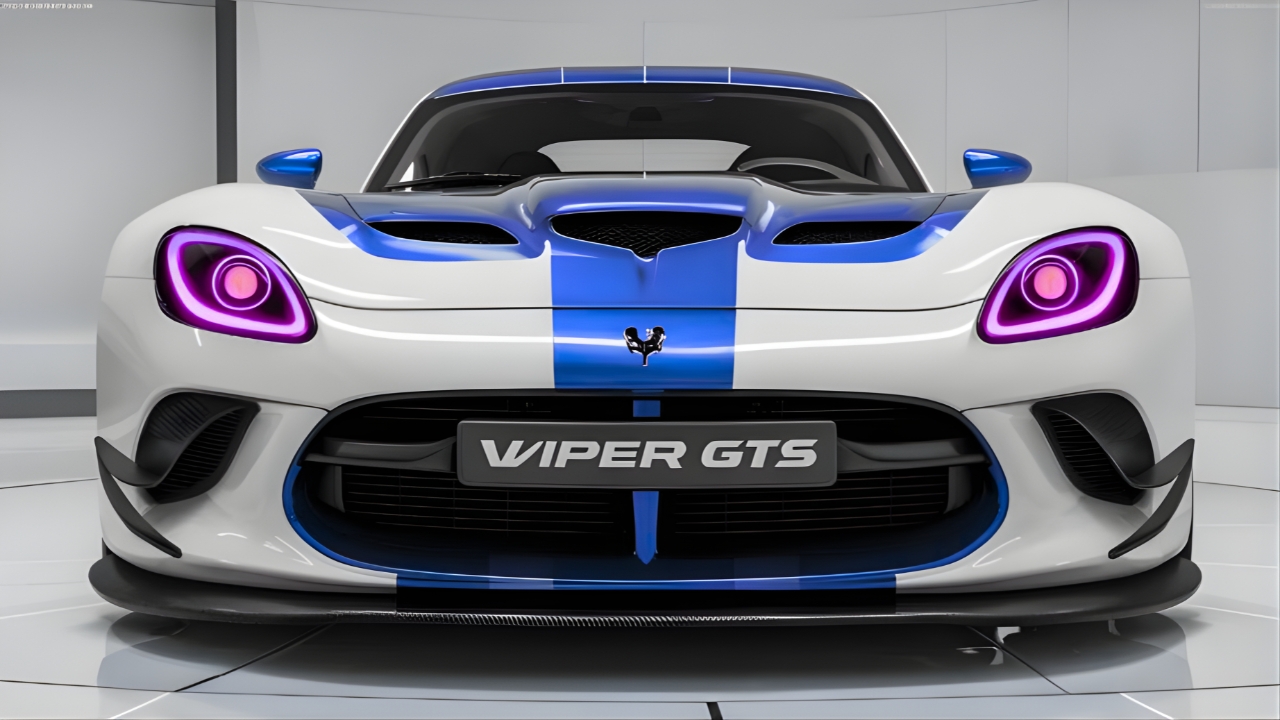
The 2026 Dodge Viper GTS Concept has officially been launched, marking the return of one of America’s most iconic supercars with a futuristic twist. Known for its aggressive styling, raw power, and legendary track performance, the Viper has long been a symbol of American muscle and automotive passion.
The 2026 GTS Concept takes this legacy to the next level with next-generation engineering, hybrid-inspired technologies, and a performance-focused design that combines speed, agility, and modern sophistication. With a starting price of $189,000, this supercar is aimed at enthusiasts who demand extreme performance, distinctive design, and cutting-edge innovation without compromising the Viper’s unmistakable character.
Striking Exterior Design
The 2026 Dodge Viper GTS Concept immediately commands attention with its bold and muscular exterior. The design reflects a perfect blend of heritage and modernity, keeping the iconic long hood and low-slung profile while introducing sharper lines and aerodynamic improvements. Large air intakes and vents enhance engine cooling and reduce drag, while the aggressive front fascia and LED headlights provide a modern, intimidating presence.
Wide fenders, aerodynamic side skirts, and a sculpted rear diffuser contribute to stability at high speeds, while the active rear wing adjusts dynamically for optimal downforce. The concept also features lightweight carbon-fiber panels that reduce overall weight without compromising strength, highlighting Dodge’s commitment to performance-oriented design.
Next-Generation Powertrain
Under the hood, the 2026 Viper GTS Concept boasts a powertrain designed to deliver breathtaking acceleration and top-tier track performance. While Dodge maintains the Viper’s reputation for raw power, the concept incorporates advanced engineering to optimize performance, handling, and efficiency. Expected engine configurations include a twin-turbocharged V10, delivering extreme horsepower and torque for thrilling straight-line speed.
Next-generation hybrid systems may also be integrated to enhance torque delivery, reduce emissions, and provide instantaneous electric boost. The combination of traditional American muscle with modern powertrain technology ensures that the GTS Concept offers both heart-stopping acceleration and precise power management.
Performance and Handling Upgrades
The 2026 Viper GTS Concept has been engineered for exceptional handling and driving precision. Dodge has incorporated a refined suspension system, adaptive damping, and advanced chassis tuning to ensure stability, control, and responsiveness at high speeds. Lightweight forged wheels with performance tires provide excellent grip, while torque vectoring enhances cornering capabilities.

The vehicle’s aerodynamics, including active spoilers and diffusers, work in tandem with the suspension system to keep the car planted even during aggressive maneuvers. These performance upgrades make the Viper GTS Concept ideal for both track enthusiasts and spirited driving on open roads, delivering a balanced combination of agility, speed, and driver confidence.
Interior Design Focused on Driver Engagement
Inside the 2026 Viper GTS Concept, Dodge has focused on creating a driver-centric environment. The cockpit is designed to immerse the driver in performance, featuring ergonomic seats with excellent lateral support, premium materials, and intuitive control layouts. The digital instrument cluster provides real-time data on speed, torque, engine performance, and lap times, while steering wheel-mounted controls allow for seamless adjustments to driving modes and performance settings.
Minimalist but high-quality interior finishes emphasize focus and functionality, while options for premium leather, carbon-fiber trims, and customizable ambient lighting offer a touch of luxury without distracting from the supercar experience. The interior ensures that every drive feels connected, responsive, and thrilling.
Advanced Aerodynamic Engineering
Aerodynamics play a critical role in the 2026 Viper GTS Concept’s performance. The car features a range of active and passive aerodynamic elements, including adjustable front splitters, rear diffusers, and a dynamically controlled rear wing. These features reduce drag, increase downforce, and improve stability at high speeds.
Air channels and vents are strategically placed to cool brakes and the engine while maintaining smooth airflow around the vehicle. Wind tunnel testing and computational fluid dynamics have been used extensively to optimize every contour, ensuring that the Viper GTS Concept achieves maximum efficiency and performance whether on the track or highway.
Cutting-Edge Technology Integration
While the 2026 Viper GTS Concept emphasizes raw performance, Dodge has also integrated advanced technology to enhance the driving experience. The vehicle is equipped with adaptive traction and stability control systems, performance-oriented launch control, and customizable driving modes to match different track and road conditions.
Advanced infotainment and connectivity options provide entertainment and navigation without compromising focus. Additionally, telemetry systems may allow drivers to monitor performance metrics, analyze driving behavior, and optimize lap times.

These technological enhancements blend seamlessly with the car’s analog driving feel, giving enthusiasts the best of both modern innovation and classic supercar engagement.
Safety and Reliability Features
Dodge has ensured that the 2026 Viper GTS Concept not only delivers extreme performance but also prioritizes safety. High-strength chassis construction, multiple airbags, advanced braking systems, and electronic stability management protect occupants while allowing them to push the car to its limits.
Driver assistance features, including adaptive cruise control, collision warning, and advanced traction control, help mitigate risks during high-speed driving. Safety-focused engineering ensures that the car is not only thrilling to drive but also dependable and secure in a variety of driving conditions.
Pricing and Market Position
The 2026 Dodge Viper GTS Concept is priced at approximately $189,000, positioning it as a premium American supercar with performance comparable to international rivals. The pricing reflects its high-end engineering, advanced performance systems, and exclusivity as a next-generation Viper model.
Dodge aims to appeal to car enthusiasts who value raw American muscle, cutting-edge technology, and collectible supercar appeal. With limited production numbers and a unique combination of style, performance, and innovation, the Viper GTS Concept is expected to become a highly sought-after vehicle for collectors and performance enthusiasts alike.
Who Should Consider the 2026 Viper GTS Concept
The Dodge Viper GTS Concept is designed for drivers who crave extreme performance, classic American muscle character, and the latest engineering innovations. It is ideal for supercar collectors, track-day enthusiasts, and performance-oriented drivers who enjoy both high-speed highway driving and circuit challenges.
The car’s combination of aggressive design, advanced powertrain, and next-generation technology ensures that it meets the expectations of drivers who demand excellence in both style and performance.

Final Verdict
The 2026 Dodge Viper GTS Concept represents the next step in the evolution of one of America’s most iconic supercars. With its aggressive design, next-generation engineering, advanced hybrid-inspired powertrain, and driver-focused interior, the Viper GTS Concept sets a new benchmark for performance, style, and innovation.
Priced at $189,000, it offers an enticing mix of exclusivity, technological advancement, and raw driving excitement. For enthusiasts seeking a supercar that embodies both heritage and future-forward performance, the 2026 Dodge Viper GTS Concept delivers an unforgettable experience.
Disclaimer
This article is based on early reports and available information regarding the 2026 Dodge Viper GTS Concept. Specifications, features, and pricing may vary depending on Dodge’s official production updates and regional availability.
